
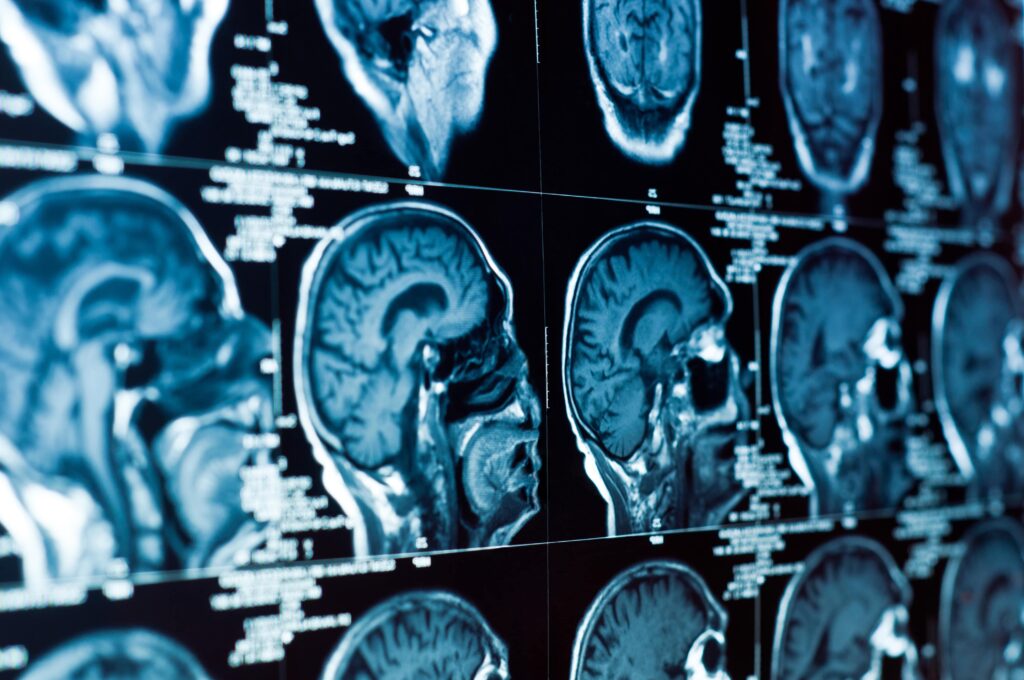
Brain Injury Lawyer Raleigh, NC
Burton Law Firm represents brain injury victims and their families throughout Wake County. Attorney Jason Burton brings 13 years of experience in catastrophic injury and motor vehicle cases and has recovered millions of dollars for clients in North Carolina and Virginia. We understand how carriers value traumatic brain injury claims, how treating providers document cognitive deficits, and what life care planning a serious case requires.
Our Raleigh, NC brain injury lawyer handles these matters on contingency. No fees are owed unless we recover on your behalf.
Why Choose Burton Law Firm for Brain Injury in Raleigh, NC?
Brain injury cases are among the most demanding in personal injury law. Selecting counsel with the background, resources, and willingness to commit the time such cases require is a meaningful decision.
Experience With Catastrophic Injury Claims
Attorney Jason Burton has practiced plaintiff-side injury law in North Carolina since 2013. He is licensed in both North Carolina and Virginia and graduated summa cum laude and as valedictorian from Elon University School of Law, where he now serves on the Advisory Board. Mr. Burton has been recognized as a Rising Star by North Carolina Super Lawyers and selected for the Million Dollar Advocates Forum.
Our personal injury lawyer in Raleigh, NC concentrates on catastrophic injury, motor vehicle, and wrongful death matters. Brain injury cases sit at the intersection of those areas.
A Record of Substantial Recoveries
Our firm has obtained millions of dollars on behalf of clients in motor vehicle, premises liability, and catastrophic injury matters. Prior results include seven-figure recoveries in serious injury and wrongful death matters.
Contingency Representation
You pay nothing upfront. There is no retainer and no hourly billing. Our fee is calculated as a percentage of the recovery, and it applies only when we recover. The initial consultation is provided at no charge.
Resources for Serious Cases
Brain injury matters require more than a lawyer and a file. Our firm engages neurologists, neuropsychologists, vocational economists, and life care planners to document the full scope of injury and quantify lifetime costs. We begin that work early, because the record built in the first six months shapes every negotiation that follows.
Candid Guidance for Families
Families of brain injury victims often carry the burden of decision making during a period of acute stress. We believe in plain, direct communication about case value, litigation risk, and timeline.
Client Feedback
⭐⭐⭐⭐⭐
“I was referred to Jason by a dear friend who is also an attorney. She told me I couldn’t be in better hands, and she was absolutely right. From our very first meeting, it was clear that I was in the hands of someone not only deeply knowledgeable and experienced, but also genuinely compassionate and committed to helping me navigate an extremely difficult and painful situation.” – Sarah Ray
Additional reviews are available on our Google Business Profile.
Types Of Brain Injury Cases We Handle in Raleigh
Brain injuries arise in a wide range of circumstances. The mechanism of injury matters because it shapes both liability and the medical proof required. Our firm handles the following categories of brain injury matters in Wake County.
- Car accidents. Closed head trauma is a frequent consequence of passenger vehicle collisions, and the diagnoses in these files range from concussion and post concussion syndrome to severe TBI with permanent cognitive deficits.
- Truck accidents. Heavy vehicle impacts generate forces that commonly produce severe TBI, and we work to preserve electronic logging data and black-box information before retention periods expire.
- Motorcycle accidents. Riders sustain TBI at disproportionate rates in crashes, even with proper helmet use, and many motorcycle accidents involve cognitive and neurological injuries alongside orthopedic trauma.
- Pedestrian accidents. A pedestrian struck by a motor vehicle has no protective barrier between the head and the impact, and these cases routinely involve skull fractures, diffuse axonal injury, and other significant head trauma.
- Bicycle accidents. Cyclists struck by motor vehicles frequently sustain head trauma, and even properly helmeted riders can suffer concussion or more severe TBI at relatively low impact speeds.
- Slip, trip, and fall accidents. A significant portion of TBI cases nationally arise from falls, and property owners who allow hazardous conditions can be held liable for slip and fall injuries that cause brain trauma.
- Premises liability accidents. Unsafe property conditions, inadequate security, and dangerous walkways can produce serious head trauma where the owner knew or should have known of the hazard.
- Impaired driving accidents. Brain trauma caused by a drunk or drugged driver may support punitive damages in addition to ordinary compensatory damages.
- Medical malpractice. Birth injury, surgical oxygen deprivation, misdiagnosis of stroke, and anesthesia errors can produce permanent brain damage, and these claims carry heightened procedural requirements including Rule 9(j) certification.
- Combined head and spinal trauma. TBI and spinal cord injury frequently co occur in high-energy collisions, and those combined cases require coordinated neurological and orthopedic proof.
- Fatal brain injury cases. When a TBI results in death, the personal representative of the estate brings the claim, and the proof requirements for wrongful death differ from those in survival actions.
North Carolina Legal Requirements for Brain Injury Cases
 Statute of limitations. Under N.C. Gen. Stat. § 1-52, an injured party generally has three years from the date of the injury to file a personal injury action. Wrongful death actions under § 1-53 carry a two year deadline. Medical malpractice claims generally carry a one year limitations period running from discovery, subject to a four year statute of repose. The text of these provisions is available through the North Carolina General Assembly.
Minor’s tolling provisions. For brain injuries sustained by children, N.C. Gen. Stat. § 1-17 tolls the limitations period during the period of minority, with separate rules applicable to medical malpractice and birth injury cases. Families should consult counsel well before the child reaches majority.
Pure contributory negligence. North Carolina applies pure contributory negligence, a doctrine that bars recovery if the injured party is found to bear any portion of fault. A brain injury victim who cannot reliably recall the events of the incident faces particular challenges under this rule, and the case file must be built to foreclose fault shifting arguments.
Capacity and guardianship. A brain injury victim who lacks decisional capacity may require the appointment of a guardian ad litem to pursue the claim. Our firm assists families in coordinating with the Clerk of Court on those appointments.
Cap on non-economic damages in medical malpractice. Under N.C. Gen. Stat. § 90-21.19, non-economic damages in medical malpractice claims are capped, subject to limited exceptions for disfigurement, loss of use, or death resulting from gross negligence.
What Damages Are Recoverable in Raleigh Brain Injury Cases?
North Carolina law recognizes three primary categories of damages in brain injury matters. A serious case often involves each category, and the documentation necessary to prove them begins during active medical treatment.
Economic Damages
Economic damages are those that can be quantified. For a brain injury victim, they often extend across the lifetime of the injured person.
- Past and future medical expenses, including emergency care, neurosurgery, intensive care, inpatient rehabilitation, and long-term nursing care
- Neurorehabilitation and cognitive therapy costs
- Prescription and medical equipment costs
- Lost wages and diminished earning capacity, which may be total and permanent in severe TBI cases
- Home modifications, assistive technology, and transportation adaptations
- Attendant care and caregiver compensation
- Case management and life care plan implementation costs
Non-Economic Damages
Non-economic damages compensate losses that resist precise calculation and often represent a substantial portion of a brain injury recovery.
- Physical pain and suffering
- Cognitive impairment, memory loss, and executive function decline
- Personality change and emotional dysregulation
- Anxiety, depression, and post-traumatic stress
- Loss of enjoyment of life and the inability to participate in prior activities
- Loss of consortium, which belongs to a spouse and addresses the impact of the injury on the marital relationship
Insurance adjusters frequently undervalue the non-economic component of a brain injury claim. Our firm documents these losses with neuropsychological testing, day in the life evidence, family testimony, and medical opinion on the permanency of cognitive deficits.
Punitive Damages
Under N.C. Gen. Stat. § 1D-15, a jury may award punitive damages when the defendant’s conduct was willful or wanton. Impaired driving that causes a brain injury, gross corporate negligence, and similar conduct may support punitive awards. North Carolina caps punitive damages at three times compensatory damages or $250,000, whichever is greater. The applicable chapter is published by the North Carolina General Assembly punitive damages provisions.
Wrongful Death Damages
When a brain injury results in death, the estate may recover funeral and medical expenses, lost net income, and the value of the decedent’s care, companionship, and guidance under N.C. Gen. Stat. § 28A-18-2. The action is brought by the personal representative of the estate.
What Steps Should I Take After a Brain Injury?
The following ten steps, taken in the aftermath of a brain injury, protect both the injured person’s health and the integrity of any subsequent claim. In many cases, a family member will need to take these steps on behalf of the injured person.
- Seek immediate medical evaluation. Any head impact, loss of consciousness, or altered mental status warrants emergency assessment. Head CT or MRI imaging is often essential to identify bleeding, swelling, or structural damage.
- Preserve all medical records from the outset. Emergency room reports, imaging studies, Glasgow Coma Scale scores, and neurology consultations provide the foundation of the case.
- Follow the treatment plan precisely. Missed appointments, gaps in therapy, and noncompliance with discharge instructions are routinely raised by adjusters to reduce claim value.
- Document cognitive and behavioral changes. Family members should maintain a daily log of memory lapses, mood changes, speech difficulties, fatigue, and headaches. That contemporaneous record becomes powerful evidence.
- Arrange neuropsychological testing. Formal testing by a qualified neuropsychologist establishes objective measurements of cognitive deficit that imaging alone cannot capture.
- Preserve the evidence from the underlying incident. If the injury resulted from a crash, fall, or other event, secure the accident report, photographs, witness contact information, and any surveillance footage.
- Avoid recorded statements to insurance carriers. A brain injury victim may have impaired recall or judgment in the weeks and months following the injury. Statements given during that period are often inaccurate and are frequently used against the claim.
- Request a guardian or power of attorney where appropriate. If the injured person cannot manage personal affairs, family members should consult counsel about formal appointment.
- Limit social media activity. Photographs and posts are routinely used by defense counsel to challenge the severity of cognitive and emotional injury.
- Consult a brain injury attorney early. The record built in the first several months often determines the ultimate outcome.
The first weeks after a brain injury are a period of medical priority. The legal record that supports compensation begins during that same period, and early involvement of counsel protects both.
Raleigh Brain Injury Infographic
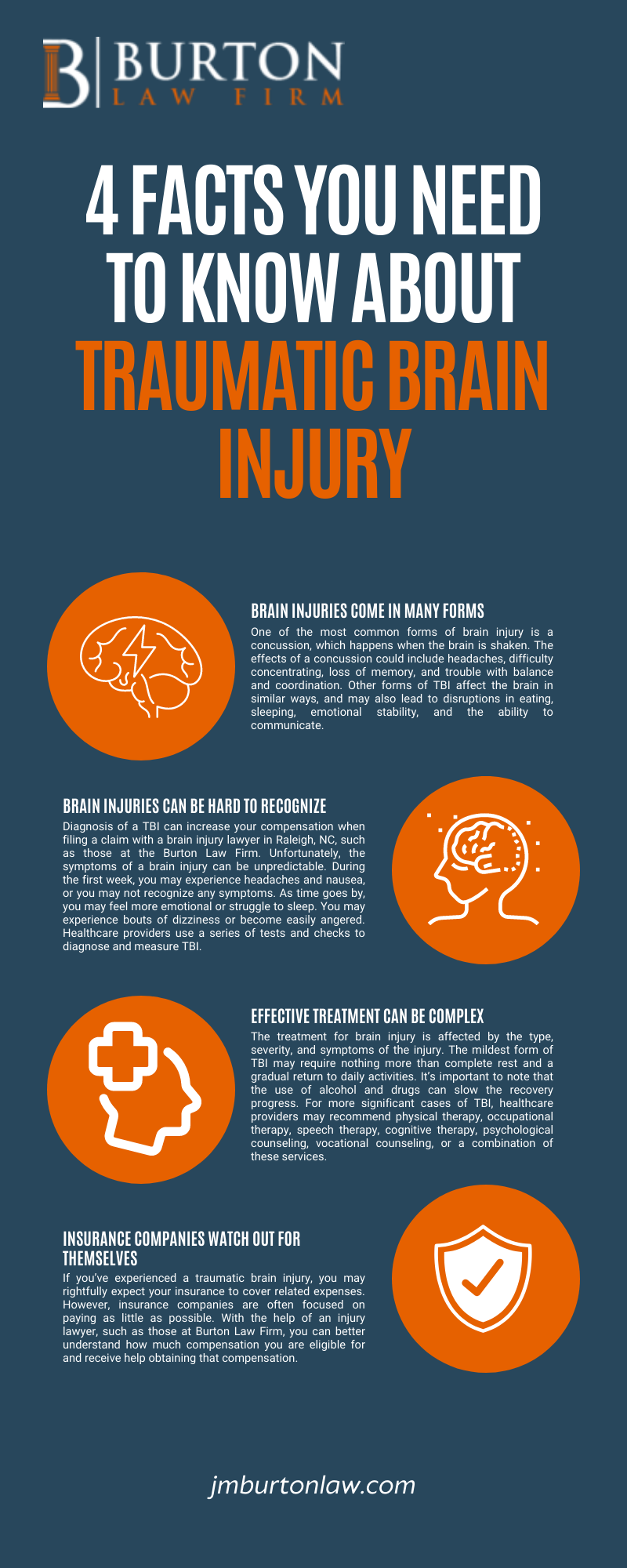
Brain Injury Statistics in Raleigh
Traumatic brain injury is a significant public health concern. The underlying data shapes how these cases are understood, valued, and tried.
The CDC Traumatic Brain Injury program identifies TBI as a major cause of death and long-term disability in the United States. According to the CDC’s TBI data resources, falls are the leading cause of TBI-related emergency department visits across all age groups, followed by being struck by or against an object, and motor vehicle collisions.
The National Institute of Neurological Disorders and Stroke classifies TBI by severity, ranging from mild (commonly called concussion) through moderate to severe. Each category carries distinct clinical expectations, although even mild TBI can produce lasting cognitive symptoms.
The Brain Injury Association of America describes TBI as a chronic condition for many of those affected, with long-term consequences for employment, family relationships, and independent living.
In North Carolina, motor vehicle collisions remain a leading source of serious TBI. The NCDOT Highway Safety Program tracks crash related injury and fatality data, which often includes head trauma as a contributing factor in serious and fatal outcomes.
Wake County, with a population of more than 1.1 million residents, experiences a significant volume of serious traumatic injury cases each year. WakeMed operates a Level I Trauma Center serving the Raleigh region, and it treats a substantial share of severe TBI cases originating in the county. The concentration of care at a Level I facility affects both the medical record and the ultimate valuation of the cases that follow.
Defense counsel sometimes invoke broad statistics about mild TBI recovery to argue that a claimant’s symptoms should resolve. Those averages do not determine individual outcomes, and our firm uses the specific medical record, imaging, and neuropsychological testing to establish the reality of each client’s condition.
Raleigh Brain Injury Lawyer FAQs
How much does it cost to hire a Raleigh brain injury lawyer?
Nothing at the outset. Our firm handles brain injury cases on contingency. The fee is calculated as a percentage of the recovery and is payable only if a recovery is obtained.
How long do I have to file a brain injury claim in North Carolina?
Three years from the date of injury for most personal injury claims under N.C. Gen. Stat. § 1-52. Medical malpractice claims generally carry a one year deadline running from discovery, subject to a four year statute of repose. Wrongful death claims allow two years. Minors may benefit from tolling provisions.
What qualifies as a traumatic brain injury?
Any trauma to the head that disrupts normal brain function may constitute a TBI. Severity ranges from brief loss of consciousness or confusion (mild) to extended coma and permanent impairment (severe). Imaging, cognitive testing, and clinical evaluation all inform the diagnosis.
Can I recover if my imaging looks normal?
Yes. Many mild and moderate TBIs produce significant symptoms without showing clear abnormalities on standard CT or MRI. Neuropsychological testing, advanced imaging, and clinical documentation are frequently used to establish injury in those cases.
How do adjusters value brain injury claims?
Carriers examine medical records, treatment duration, imaging, neuropsychological testing, and documented impact on work and daily life. They also apply internal valuation formulas, and initial offers are frequently below reasonable case value.
What is a life care plan?
A life care plan is a detailed document prepared by a qualified planner, often a nurse or rehabilitation professional, projecting the future medical, therapeutic, and support needs of a seriously injured person. It is commonly used to prove future damages in catastrophic cases.
Does a helmet affect my brain injury claim?
It can. Helmet use at the time of injury may be raised by insurers to reduce exposure, particularly in motorcycle, bicycle, and recreational cases. Outcomes vary with the facts and the applicable law.
My family member cannot communicate clearly. How do we pursue a claim?
A guardian ad litem or an existing power of attorney may pursue the claim on behalf of the injured person. Our firm assists families with the coordination necessary to establish the appropriate representative.
Can a mild TBI support a claim?
Yes. A mild TBI that produces persistent cognitive, emotional, or physical symptoms can support a significant recovery. Documentation of post concussion syndrome and its effects on work and daily life is central to those cases.
What if the brain injury was caused by medical error?
Medical malpractice brain injury cases involve specialized procedural requirements, including a Rule 9(j) certification.
How long does a brain injury case take?
Straightforward cases with clear liability may resolve in several months. Catastrophic cases involving life care planning, litigation, or disputed liability often require one to three years or longer. We do not pursue premature settlements that undervalue the claim.
Will I need to testify?
Not always. Many brain injury cases resolve before trial. When testimony is required, we prepare clients and family members thoroughly, with attention to the cognitive limitations that a TBI often imposes.
What is the difference between a concussion and a TBI?
A concussion is a form of mild TBI. Every concussion is a TBI, but not every TBI is a concussion. Severity is determined by loss of consciousness, Glasgow Coma Scale scoring, imaging findings, and persistence of symptoms.
Can I recover for future medical costs?
Yes. Future medical costs are a standard element of damages in serious brain injury cases. A life care plan, supported by treating provider opinion, establishes those costs for settlement or trial presentation.
What should I bring to an initial consultation?
The emergency room records, imaging reports, discharge instructions, any crash or incident reports, correspondence with insurance carriers, and a list of treating providers. Clients lacking any of these items should still schedule a consultation. Our firm can assist with record gathering.
What to Expect With Your Brain Injury Case
Brain injury cases do not follow a uniform timeline or resolution path. The factors that most affect the process include the severity of the injury, the clarity of liability, the available insurance coverage, and the cooperation of the carrier.
During the active treatment phase, the case file is built through medical record collection, provider statements, and documentation of how the injury affects daily life. We coordinate with treating physicians and retain appropriate specialists during this period.
As treatment plateaus, we prepare a demand package that includes the full medical record, specialist reports, a damages analysis, and, when appropriate, a life care plan. The carrier’s response frequently reflects an initial valuation substantially below case worth. Negotiation follows.
If pre suit negotiation does not produce a fair resolution, we file suit. Litigation involves discovery, depositions, mediation, and, in cases that do not settle, trial. Mr. Burton is a trial lawyer, and that capability is factored into every defense evaluation of our files.
What Are Important Local Resources for Raleigh + Brain Injury?
The resources below may be of assistance following a brain injury in the Raleigh area. Burton Law Firm is not affiliated with any of these organizations, and inclusion is not an endorsement.
- WakeMed. Main line: (919) 350-8000. Level I trauma facility and a primary destination for severe TBI cases originating in Wake County.
- UNC Health. Main line: (984) 974-1000. Major academic health system providing neurology and rehabilitation services in the Raleigh region.
- Duke Raleigh Hospital. Main line: (919) 954-3000. Provides neurological and rehabilitation care.
- Raleigh Police Department. Main line: (919) 996-3335. Handles non-emergency reporting and provides copies of incident reports.
- Wake County government. Main line: (919) 856-6000. Information on county services, including the Sheriff’s Office and Clerk of Court.
- NCDOT Crash Reports. Portal for ordering official crash report copies.
Contact Burton Law Firm
A brain injury changes the lives of the injured person and the family that supports them. The legal process, when it becomes necessary, should not add to that burden.
Burton Law Firm accepts Raleigh brain injury cases on contingency. No fees are owed unless a recovery is obtained. Initial consultations are provided at no charge. During that consultation, we will review the circumstances of the injury, answer your questions, and provide our honest assessment of the matter.
Contact us to discuss your brain injury case with our firm.