

What Are the Most Common Bicycle Accidents
Bicycling is a popular mode of transportation, providing numerous health benefits and an environmentally friendly way to travel. However, like any form of transportation, it comes with its risks. Bicycle accidents are unfortunately common, and understanding the most frequent types of these accidents can help cyclists stay safer on the roads. If you ever find yourself in a situation where you need legal assistance, contact the Burton Law Firm, PLLC, we can provide the support and guidance you need.
- What Are the Most Common Bicycle Accidents
- Most Common Bicycle Accident Injuries
- What To Do After a Bicycle Accident
- Frequently asked questions About Bicycle Accidents
- How Can Burton Law Firm, PLLC, Assist Me After a Bicycle Accident?

Collisions at Intersections
One of the most common types of bicycle accidents occurs at intersections. Cyclists are at risk when drivers fail to yield the right of way, do not see the cyclist, or misjudge the cyclist’s speed. Always be extra cautious when approaching and navigating through intersections, and make sure to signal your intentions to drivers.
Dooring Accidents
“Dooring” refers to incidents where a parked car’s door is opened directly in the path of an oncoming cyclist, causing the cyclist to collide with the door. These accidents can result in serious injury, and they highlight the importance of drivers checking for cyclists before opening their car doors. As cyclists, always be vigilant and try to ride a safe distance away from parked cars.
Rear-End Collisions
Rear-end collisions happen when a vehicle strikes a bicycle from behind. These accidents can be severe and are often caused by distracted driving, speeding, or the driver misjudging the distance between their vehicle and the bicycle. To reduce the risk of rear-end collisions, ensure you are visible to drivers, use lights and reflectors, and consider taking routes with less traffic when possible.
Right Hook Accidents
A “right hook” accident occurs when a vehicle makes a right turn and collides with a cyclist traveling in the same direction. These accidents typically happen when the driver fails to notice the cyclist or misjudges their speed. Cyclists can protect themselves by staying alert, using bike lanes when available, and making eye contact with drivers to ensure they are seen.
Left Cross Accidents
A “left cross” accident takes place when a vehicle traveling in the opposite direction turns left, cutting off or colliding with an oncoming cyclist. To avoid these accidents, make yourself as visible as possible and always be prepared to stop or take evasive action if a vehicle appears to be turning into your path.
While cycling offers numerous benefits, it’s crucial to be aware of the risks and take steps to protect yourself on the road. If you ever find yourself involved in a bicycle accident, don’t hesitate to reach out to the Burton Law Firm, PLLC. Our team is here to help guide you through the legal process and ensure that your rights are protected. Together, we can work towards a safer cycling environment and provide the support you need when you need it most.
Bicycling is a popular activity enjoyed by millions worldwide, whether for recreation, exercise, or commuting. However, with the increase in bicycle usage, the risk of accidents and injuries also rises. Understanding the most common bicycle accident injuries and the appropriate steps to take afterward is crucial. In such challenging times, the Burton Law Firm, PLLC, stands ready to provide expert legal advice and support.
Most Common Bicycle Accident Injuries
Bicycle accidents can result in a range of injuries, from minor scrapes to severe trauma. Some of the most frequently encountered injuries include:
- Head Injuries: These can range from mild concussions to severe traumatic brain injuries. Wearing a helmet significantly reduces the risk of head injuries.
- Road Rash: This occurs when a cyclist’s skin scrapes against the road surface, resulting in abrasions. Protective clothing can help mitigate road rash.
- Fractures and Broken Bones: Collisions or falls can lead to broken arms, legs, or other bones. Wearing protective gear like knee and elbow pads can provide additional protection.
- Sprains and Strains: Overexertion or falls can cause muscle and ligament injuries.
- Dental and Facial Injuries: These can occur if a cyclist lands on their face during a fall. A properly fitted helmet with a face guard can help prevent these injuries.
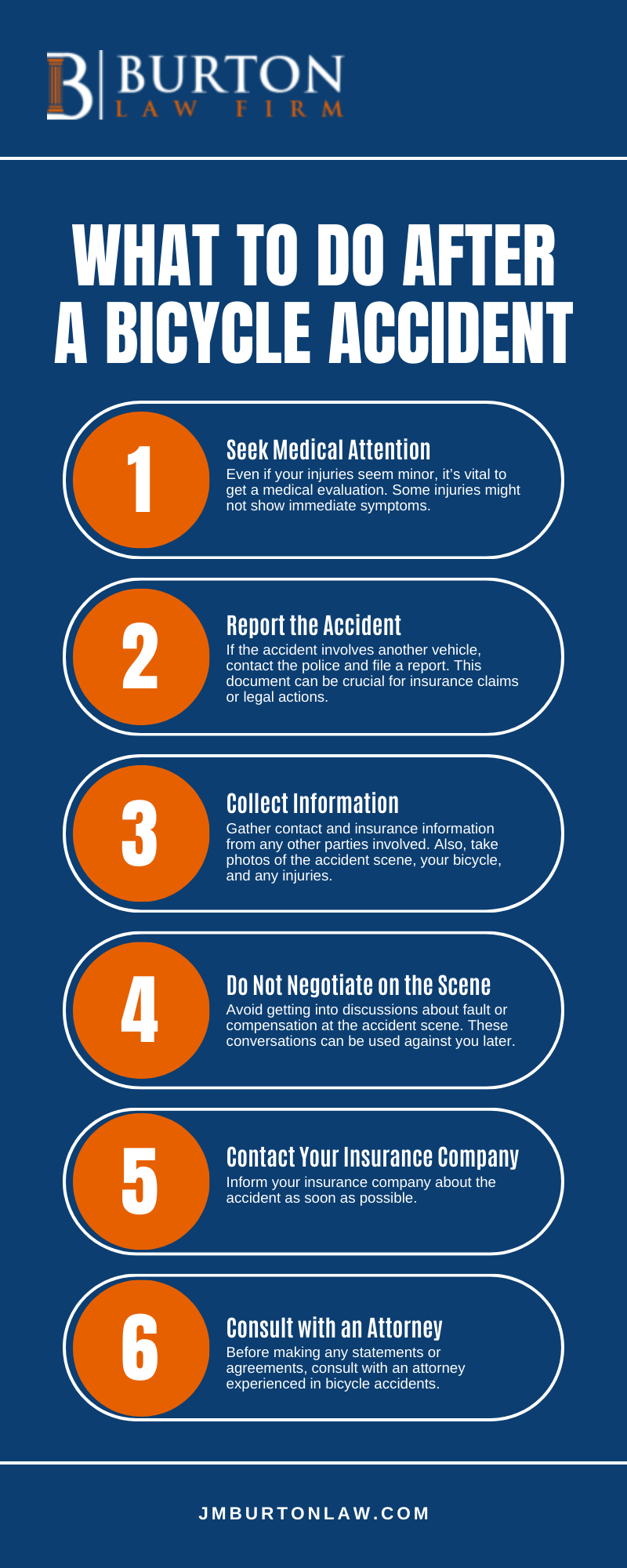
What To Do After a Bicycle Accident
If you ever find yourself involved in a bicycle accident, taking the right steps afterward is crucial for your health and any potential legal action.
- Seek Medical Attention: Even if your injuries seem minor, it’s vital to get a medical evaluation. Some injuries might not show immediate symptoms.
- Report the Accident: If the accident involves another vehicle, contact the police and file a report. This document can be crucial for insurance claims or legal actions.
- Collect Information: Gather contact and insurance information from any other parties involved. Also, take photos of the accident scene, your bicycle, and any injuries.
- Do Not Negotiate on the Scene: Avoid getting into discussions about fault or compensation at the accident scene. These conversations can be used against you later.
- Contact Your Insurance Company: Inform your insurance company about the accident as soon as possible.
- Consult with an Attorney: Before making any statements or agreements, consult with an attorney experienced in bicycle accidents.
Bicycle Accident Infographic
Reach Out to Burton Law Firm, PLLC
After a bicycle accident, you might feel overwhelmed and unsure of the next steps. That’s where we come in. At Burton Law Firm, PLLC, our experienced team is ready to guide you through the legal process, ensuring your rights are protected and you receive the compensation you deserve. We understand the unique challenges bicycle accident victims face, and we are here to help. Don’t navigate this challenging time alone; let us stand by your side and fight for your rights. Contact us today for a consultation and let’s work together towards your recovery and justice.
Frequently asked questions About Bicycle Accidents
Do I Need to File a Police Report After a Bicycle Accident?
Yes, filing a police report is a crucial step after a bicycle accident, especially if it involves another vehicle or results in injury or significant property damage. A police report provides an official record of the event and can be invaluable if you need to file an insurance claim or pursue legal action.
Can I Seek Compensation if I Was Partially at Fault for the Bicycle Accident?
In many jurisdictions, you may still be able to seek compensation even if you were partially at fault for the accident, thanks to comparative negligence laws. However, your compensation may be reduced by the percentage of fault attributed to you. To understand your rights and potential for compensation, it’s advisable to consult with an attorney experienced in bicycle accidents.
What Type of Compensation Can I Pursue After a Bicycle Accident?
If you’ve been involved in a bicycle accident due to someone else’s negligence, you might be entitled to compensation for various damages. This can include medical expenses, lost wages, property damage, and pain and suffering. An experienced attorney can help assess your case and guide you in pursuing the full compensation you deserve.
How Can Burton Law Firm, PLLC, Assist Me After a Bicycle Accident?
At Burton Law Firm, PLLC, we specialize in helping bicycle accident victims navigate the complex legal landscape. We understand the unique challenges you face and are here to provide the support, guidance, and legal expertise you need. Together, we will work diligently to investigate your case, negotiate with insurance companies, and fight for your rights in court if necessary. Don’t face this challenging time alone; let us stand by your side and work towards the justice and compensation you deserve. Contact us today for a consultation and let’s start the journey towards your recovery.
Understanding Bike Accident Laws In North Carolina
When it comes to bike accidents, a Raleigh, NC bicycle accident lawyer knows that understanding the specific laws and regulations in North Carolina is crucial for both cyclists and motorists. Navigating the legal landscape can be challenging, but having the right knowledge is essential for pursuing a bike accident claim and seeking compensation for your injuries. If you’ve been injured in a crash, contact the Burton Law Firm for help.
Bicycle Traffic Laws
In North Carolina, bicycles are considered vehicles, and cyclists have the same rights and responsibilities as motorists when using the roadways. This means that cyclists must obey traffic laws, including stopping at red lights and stop signs, yielding the right of way when required, and using hand signals to indicate turns and stops.
Riding On The Right
Cyclists in North Carolina are required to ride as close to the right side of the road as practicable, except when passing another vehicle, preparing for a left turn, or avoiding road hazards. However, it’s important to note that cyclists are not obligated to ride on the shoulder or within a designated bike lane if it’s not safe to do so.
Helmet Laws
North Carolina has helmet laws in place for young cyclists. If you are under the age of 16, you are legally required to wear an approved bicycle helmet while riding. Wearing a helmet is a crucial safety measure, regardless of age, and can help prevent serious head injuries in the event of an accident.
Passing Laws
Motorists in North Carolina are required by law to provide a safe passing distance when overtaking a cyclist. The law specifies that a motorist must provide at least four feet of clearance when passing a cyclist. This distance helps ensure the safety of both the cyclist and the driver.
Right-of-Way Laws
Cyclists have the same right-of-way as motorists when riding on the road. However, motorists must yield the right of way to cyclists when turning left in front of them, just as they would yield to another vehicle. It’s essential for both cyclists and motorists to be aware of these right-of-way laws to prevent accidents. If a vehicle driver failed to yield the right of way and you have been injured, a Raleigh bicycle accident lawyer can help.
Bike Lanes And Paths
North Carolina has made efforts to create bike-friendly infrastructure, including bike lanes and paths. Cyclists are encouraged to use these designated facilities when available, but they are not required to do so. Motorists should also be cautious when sharing the road with cyclists and yield to them when necessary.
Seeking Legal Representation
When you are involved in a bike accident in North Carolina, understanding these laws is essential for protecting your rights. If you’ve been injured in a bike accident due to the negligence of a motorist or another party, it’s crucial to seek legal representation from an experienced Raleigh bicycle accident lawyer. Contact the Burton Law Firm today to discuss your bike accident case and explore your legal options. Our compassionate and experienced attorneys are ready to fight for your rights and help you recover from your injuries with the compensation you deserve.