
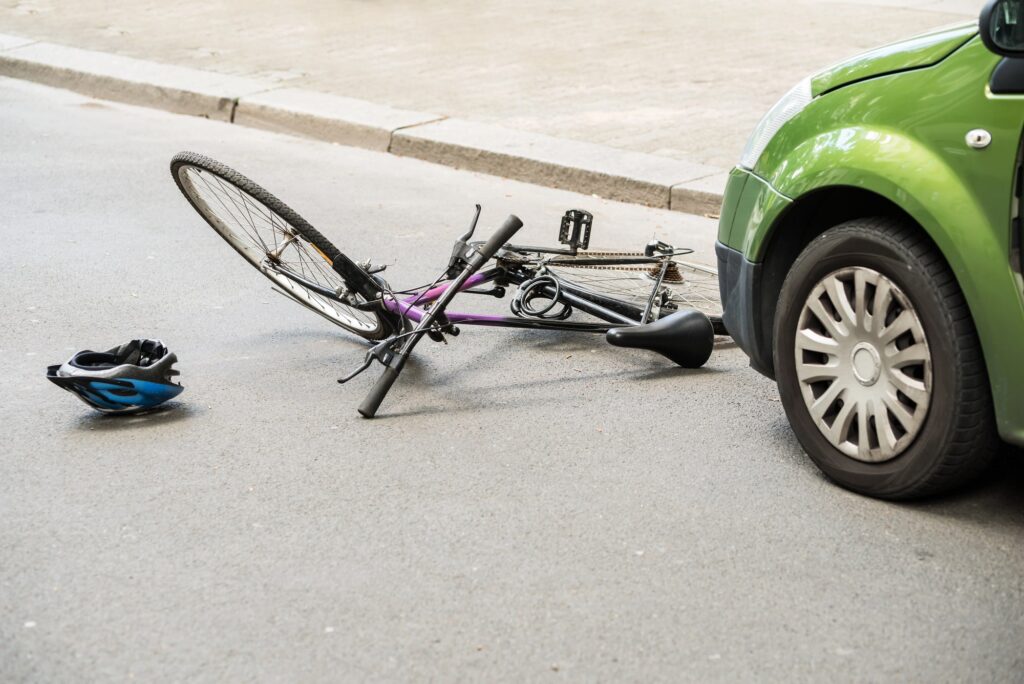
Cities build bike paths to make cycling safer. But when those paths are poorly designed, they actually create new hazards that cause serious accidents. We’ve represented cyclists who got hurt because a bike path suddenly dumped them into traffic without warning, or because the pavement was so cracked they lost control, or because sight lines at an intersection made collisions inevitable. These aren’t just unfortunate accidents. They’re failures of infrastructure design, and someone needs to be held accountable.
Common Design Flaws That Cause Cyclist Injuries
Not all bike paths are created equal. Some get built without proper planning or adherence to safety standards, and cyclists pay the price.
Abrupt Transitions Into Traffic: One of the most dangerous design failures happens when a bike lane or path ends without any warning or a protected transition. You’re riding along in what feels like a safe space, and suddenly the lane just disappears, and you’re forced to merge into moving traffic. Drivers aren’t expecting you. You don’t have enough space to safely enter the vehicle lane. Accidents happen.
Poor Intersection Design: Intersections are already the most dangerous places for cyclists. Bad design makes them worse. We’ve seen bike paths that route cyclists behind parked cars, making them invisible to turning vehicles. Or paths that cross driveways at angles that give neither the cyclist nor the driver adequate sight lines. When a right hook or left cross accident happens at one of these poorly designed intersections, it’s not just driver error. It’s an infrastructure problem.
Inadequate Separation From Vehicle Traffic: Paint isn’t protection. A white line on the road doesn’t stop a two-ton vehicle from drifting into the bike lane. Protected bike lanes with physical barriers are much safer, but many cities cheap out and just paint lines. When drivers cross those lines and hit cyclists, the question becomes whether the city did enough to actually separate and protect bike traffic.
Surface Hazards and Maintenance Failures: Bike paths need maintenance just like roads do. But they often get neglected. Potholes, cracks, tree roots pushing up through pavement, debris accumulation, and standing water all create serious hazards for cyclists. Unlike car drivers who can usually navigate around these problems, cyclists on narrow paths often can’t avoid them safely.
Who Can Be Held Liable For Design Failures
Figuring out who’s responsible for a poorly designed bike path isn’t always straightforward. Municipalities are often liable when their roads and bike infrastructure don’t meet accepted engineering standards. Cities have a duty to design and maintain reasonably safe roadways for all users, including cyclists. When they fail to do that, they can be held accountable.
But suing a city or county is different from suing a private party. Government entities have specific rules about notice requirements and filing deadlines. You typically need to file a notice of claim much faster than you would in a regular personal injury case. Missing these deadlines can kill your case before it even starts.
At times, the municipality isn’t the only liable party. The engineering/architecture firm responsible for designing the street or the construction company that built it, possibly incorrectly, can also be held liable.
Proving Your Case Requires Technical Evidence
You can’t just say the bike path was dangerous. You need to prove it didn’t meet applicable standards and that this failure caused your injuries.
This usually requires working with traffic engineers or infrastructure specialists who can evaluate the design against accepted guidelines like those from the Federal Highway Administration or the American Association of State Highway and Transportation Officials. These professionals can identify specific code violations or design deficiencies that created the hazard.
Documentation matters enormously. Photos of the accident scene, measurements of lane widths, sight line analysis, maintenance records from the city, and reports of prior accidents at the same location all help build your case. A Raleigh bicycle accident lawyer can send records requests and preservation letters to make sure this evidence doesn’t disappear.
Why These Cases Take Longer To Resolve
Infrastructure liability claims are more complicated than typical accident cases. The government entities involved have more legal protections and more resources to fight claims. They’ll argue they have governmental immunity, or that the design met standards at the time of construction, or that you were somehow responsible for your own injuries.
Gathering evidence takes time. Getting maintenance records, design plans, and engineering reports from city departments involves formal requests and sometimes legal compulsion. Finding the right technical witnesses to evaluate the infrastructure requires specialized knowledge.
But these cases are worth pursuing. When a dangerous bike path design causes injuries, holding the responsible parties accountable isn’t just about your compensation. It’s about forcing changes that protect other cyclists from getting hurt at the same location.
Don’t Assume You Were Just Unlucky
If you crashed on a bike path and got hurt, don’t automatically assume it was your fault or just bad luck. Take a hard look at what actually caused the accident. Was the path poorly maintained? Did it have dangerous transitions or bad sight lines? Did the design violate safety standards?
At Burton Law Firm, we know how to evaluate whether infrastructure failures contributed to bicycle accidents. We work with the right professionals to prove design deficiencies and navigate the complicated process of bringing claims against government entities. If you’ve been injured on a poorly designed bike path, contact a Raleigh bicycle accident lawyer to discuss whether the infrastructure itself shares blame for what happened.