
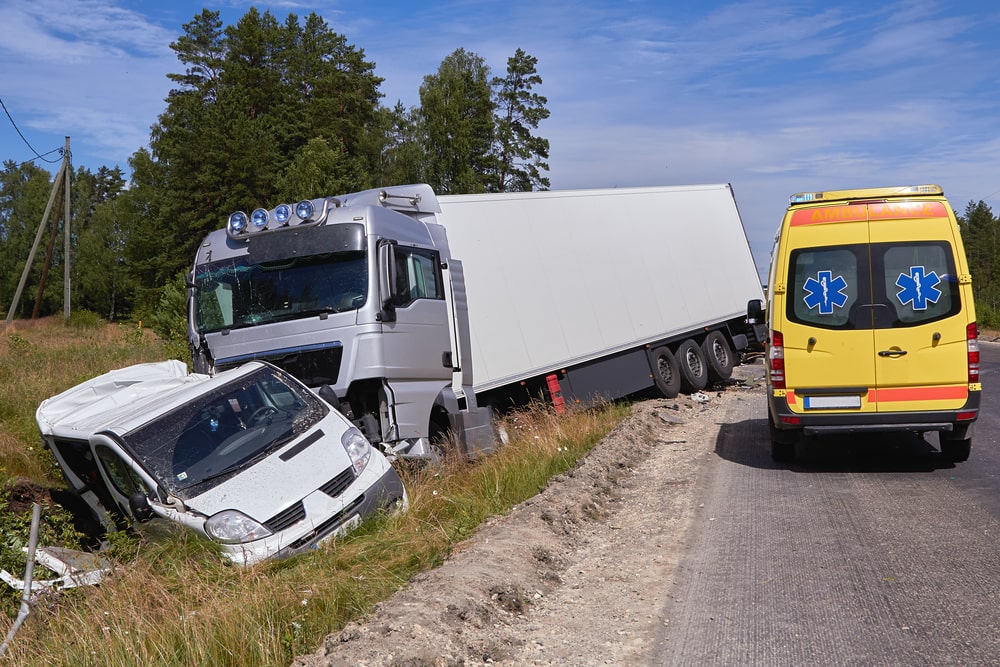
Most people come in thinking they can only sue whoever was driving. That makes sense on the surface, but truck accidents don’t work like regular car crashes. The company that put that driver on the road? They’re often just as responsible, sometimes more so.
Understanding Vicarious Liability In Trucking Cases
There’s this legal concept called vicarious liability. Basically, it means employers are responsible for what their employees do on the job. So if a truck driver causes an accident while hauling freight or making deliveries, the company they work for is on the hook, too.
The technical question we look at is whether the driver was acting “within the scope of employment” when the crash happened. But if they were doing anything work-related, that answer is usually yes.
Why does this matter so much? Because the driver probably can’t pay for your injuries. Think about someone who got rear-ended by an 18-wheeler and spent three months in the hospital. You’re looking at medical bills that might hit $400,000, maybe more. Lost wages. Ongoing therapy. Pain and suffering. That truck driver’s personal insurance might cover $100,000 if you’re lucky. That’s nowhere close to enough.
The insurer for the trucking company is who you will really be getting the most payout from. They will also likely be the most realistic target for an attempt at fair compensation.
When Companies Try To Avoid Responsibility
Trucking companies aren’t stupid. They know about vicarious liability, and they’ve gotten creative about dodging it. The favorite trick? Calling their drivers independent contractors instead of employees. They’ll argue up and down that the driver was running his own business, just happened to be hauling their freight when the accident happened. If a court buys that argument, the company might walk away without paying a dime.
We fight these classifications constantly. Just because a company calls someone an independent contractor doesn’t actually make them one. Courts look past the paperwork at the real relationship. Did the company tell the driver where to go, when to be there, and how to do the job? Then they were acting like an employer, regardless of what the contract says. And we’ve won against these arguments many times.
Direct Negligence Claims Against Trucking Companies
Sometimes you don’t even need vicarious liability. Sometimes the company screwed up in ways that directly caused the accident. Maybe they hired a driver with three DUIs on his record. Maybe they skipped required maintenance, and the brakes failed. Maybe they pressured drivers to keep driving past their legal hours to meet impossible delivery deadlines. That’s direct negligence, and it gives you another way to hold the company responsible.
Common examples we see:
- Hiring drivers without checking their safety records
- Not doing the required drug tests
- Ignoring maintenance schedules
- Pushing drivers to violate federal hours of service rules
- Barely training people before putting them in an 80,000-pound vehicle
A Raleigh truck accident lawyer digs into the company’s practices, their hiring files, and their maintenance logs. We look for patterns showing they cut corners on safety to save money or meet deadlines. When we find that stuff, it makes your case significantly stronger.
Why Suing Multiple Parties Strengthens Your Case
Going after both the driver and the company isn’t just about having backup options. It changes the entire dynamic of your case. Start with the money. That driver might have $100,000 in coverage, maybe $250,000 if he were smart about his insurance. The trucking company? Federal law requires them to carry at least $750,000 for most freight operations. Many carry several million. When you name both defendants, you’re potentially accessing both policies.
But there’s another advantage. Multiple defendants start getting nervous about how a jury might split up the blame. The driver’s insurance company might try to pin everything on the company’s bad policies. The company’s insurer will argue its driver went rogue. All that finger-pointing creates settlement pressure that benefits you. We’ve seen cases where neither defendant wanted to risk a jury deciding they were 80% responsible. Suddenly, they’re both more interested in settling.
Other Parties Who Might Share Liability
Sometimes there are even more players involved. The company that loaded the cargo improperly. The maintenance shop that did shoddy brake work. The parts manufacturer if something was defective. Even another driver whose negligence contributed to the whole mess.
At Burton Law Firm, we investigate all of it. Driver logs, maintenance records, the company’s hiring policies, everything. We bring in accident reconstruction people when we need them. Industry specialists who can explain what the regulations require and how the company violated them. Every potential defendant represents another insurance policy, another source of compensation.
The Investigation Makes All The Difference
Time matters enormously in these cases. Trucking companies move fast after accidents. They send investigators to the scene, they download the black box data from the truck, and they get statements from their driver while everything’s fresh. And evidence starts disappearing almost immediately.
Federal regulations only require companies to keep driver logs for six months. Dashcam footage gets recorded over. Nearby businesses delete their security camera footage after 30 or 60 days. Witnesses move away or forget details.
A Raleigh truck accident lawyer can send preservation letters requiring the company to save everything related to the crash. We can inspect the actual truck before they repair or sell it. We can subpoena records before they conveniently disappear. Without quick action, you lose the ability to prove what actually happened. And if you can’t prove it, you can’t win.
Multiple parties often share responsibility. The driver made mistakes, sure. But the company hired him despite red flags, pushed him to drive exhausted, or skipped brake inspections to save money. Each one of those failures contributed to your injuries. Each one represents a potential source of full compensation.
We can figure out who’s actually responsible and make sure you’re pursuing claims against everyone who played a role in what happened to you. That’s how you get the recovery you need, not just whatever the driver’s limited insurance can cover.