
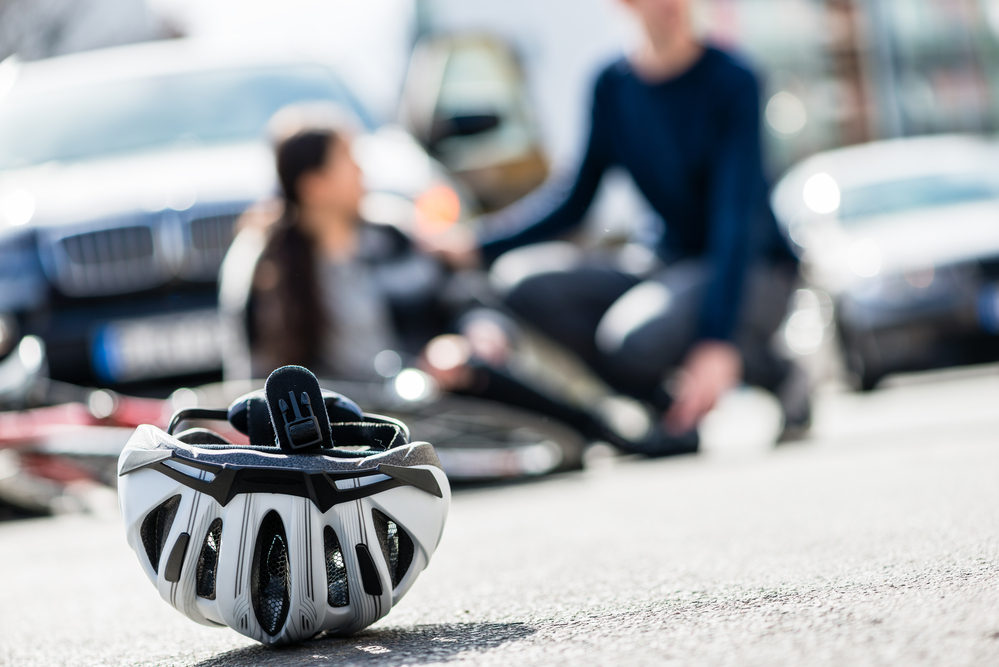
A bicycle helmet is a safety choice, and North Carolina treats it as a legal duty for young riders. The same law also says what a missing helmet cannot be used for after a crash.
The helmet duty applies to riders under 16
North Carolina General Statutes Section 20-171.9 applies to any bicycle on a public roadway, bicycle path, or right-of-way. It bars a parent or guardian from knowingly allowing a person under 16 to ride, or to ride as a passenger, without a properly fitting, securely fastened helmet.
The statute sets no helmet requirement for riders who are 16 or older. It addresses the adult responsible for a younger rider rather than the child.
Passengers have their own rules
A child passenger must be able to stay upright and must sit alone on a saddle seat, such as on a tandem bicycle. A child who weighs less than 40 pounds or is shorter than 40 inches must sit in a restraining seat and be secured in it.
An injured rider or parent who has been told the missing helmet ends a claim can ask a Raleigh bicycle accident lawyer how the statute treats that argument. The statute speaks to it directly in its liability subsection.
A missing helmet cannot prove negligence
One subsection of the statute is a limit. A violation of the helmet or passenger rules cannot be used to assign negligence or liability to any party, and it cannot be imputed to any party.
An insurer can’t treat the lack of a helmet as proof that the rider or the parent caused the crash. A rider hit by a turning driver can still pursue a Raleigh car accident claim in the usual way, because fault gets decided on the road facts.
A violation carries a fine of up to $10
A violation of the statute is an infraction. A responsible parent or guardian may be ordered to pay a fine of up to $10, and that figure includes penalty assessments and court costs. A court may waive the fine after a first conviction if the required helmet or seat has been obtained and is in use.
Riders hit by a commercial driver can bring a truck collision case on the same footing. A preservation request for carrier records and driver logs should go to the trucking company early.
Insurers may blame the rider in other ways
Lighting falls outside this statute. Insurers may blame the rider for poor lighting, riding in the wrong place, or failing to watch for turning cars.
In one reported crash, the appellate court reversed because the jury received a sudden emergency instruction the evidence did not support, after a cyclist rode into a fallen power line while another rider followed too closely. Insurers can raise conduct arguments of this kind whether or not a helmet was worn.
Equipment and records after a bicycle crash
Four kinds of evidence support a claim:
- Photos of the bicycle and the road surface can fix the point of impact.
- Treatment notes from the first visit can link each injury to the fall or collision.
- Witness names collected at the scene can support the rider’s account.
- Camera footage from nearby homes or businesses can capture the collision.
Lighting and equipment can become part of the fault argument. In a nighttime moped crash, the jury found the rider contributorily negligent for poor lighting even though it also found the turning driver negligent.
Records carry the rider’s account
In a bicycle claim the rider’s account and the driver’s account are each tested against the photos, treatment notes, and witness names listed above. Witnesses can describe the rider’s position and the driver’s turn.
Jason Michael Burton represents people hurt in catastrophic injury and motor vehicle cases at Burton Law Firm, our firm, where he has practiced for 13 years as a fifth-generation trial lawyer. He is admitted in North Carolina and Virginia and earned his law degree at Elon University School of Law.
Walkers, riders, and the next step
A child struck while walking a bike across an intersection can bring a pedestrian accident claim when the driver failed to yield, and the helmet statute stays out of the fault question either way. The statute’s limit covers violations of its own helmet and passenger rules, not a driver’s failure to yield.
Receipts and photos of a damaged helmet and bicycle document what the gear cost. The damaged helmet itself is part of that record.
A rider or parent who wants to understand how the helmet statute affects a claim can reach out to a Raleigh bicycle accident lawyer about the facts of the crash. Photos of the helmet and the bicycle are worth keeping from the start.