
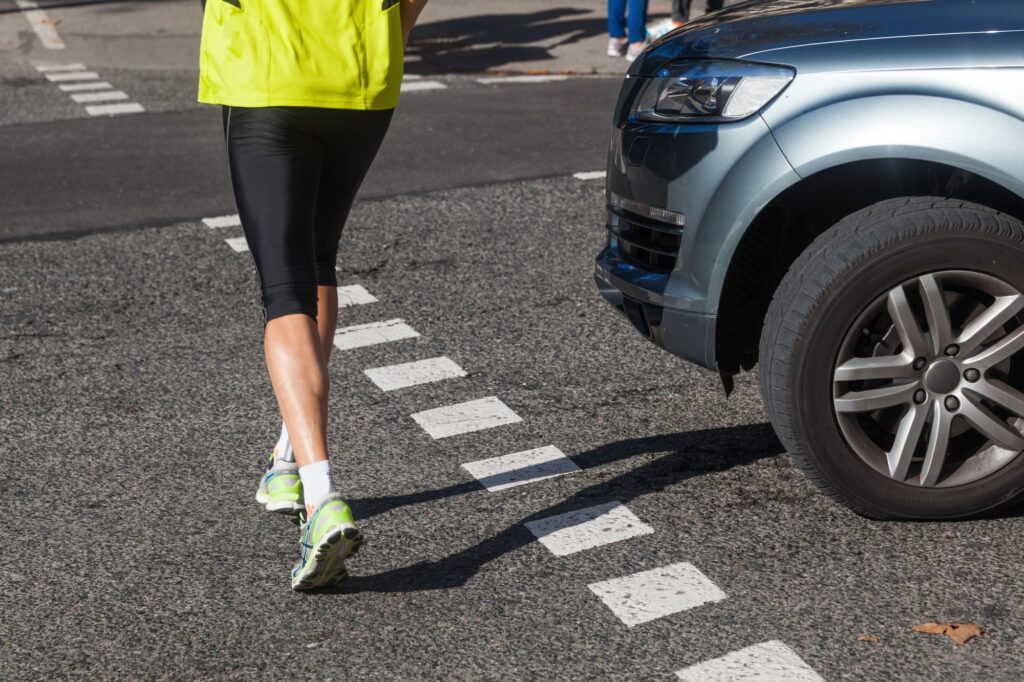
So you started crossing when the walk signal was on. Halfway through, it started flashing. Then a car hit you. Who’s at fault? It’s not as straightforward as most people think. And I need to explain why, because crosswalk signal timing can absolutely determine whether you get compensation or walk away with nothing.
How These Signals Actually Work
The signals have three phases. You’ve got the steady walking person, which means start crossing. Then comes the flashing hand with the countdown timer. Finally, the steady hand that says “Don’t Enter”. That middle phase confuses everyone. When the hand starts flashing, it doesn’t mean sprint back to the curb. It means don’t start crossing if you haven’t already stepped into the street. If you’re already out there, you finish crossing at a normal pace. That’s what you’re supposed to do. The countdown tells you how many seconds until the light changes. Engineers base these on average walking speed, about 3.5 feet per second, according to the Manual on Uniform Traffic Control Devices. They assume you can cross without running.
Getting Hit During The Countdown
Insurance companies will try to blame you for this. Every single time. They’ll say you should’ve waited. Or moved faster. Or somehow knew their driver was going to blow through the intersection. But if you entered legally during the steady walk signal, you had every right to finish crossing. Drivers are supposed to yield to pedestrians already in the intersection. North Carolina law is clear about this.
The problem? We have contributory negligence in this state. That means if the insurance company can show you contributed to the accident even one percent, you get nothing. Zero. Which is why every detail about when you entered that crosswalk matters enormously.
When Things Get Complicated
Some situations make your case harder to win. If you stepped off the curb after the countdown already started, you violated the signal. Doesn’t automatically mean the crash was your fault, but it gives them something to work with. And they will work with it.
Crossing really slowly can hurt you, too. If the timing was adequate for normal walking speed and you were moving much slower, the driver’s lawyer will argue they had no reason to think you’d still be out there when their light turned green. Were you looking at your phone? That’s ammunition for them to claim you weren’t paying attention to the countdown and should’ve adjusted your pace.
Bad Signal Timing
Sometimes it’s not you. Sometimes it’s not even the driver. Sometimes the city just sets the timer too short. We’ve seen intersections where elderly pedestrians or people with kids can’t possibly make it across during the walk phase. That’s dangerous, and it causes accidents. If the timing was inadequate, the municipality might share liability. Proving that takes engineering analysis, but it’s worth pursuing when the facts support it.
What You Should Document
I know this is hard to think about right after you’ve been hit. You’re hurt, you’re in shock, documenting evidence isn’t exactly your priority. But if you can, try to remember what the signal showed when you started crossing. Was it flashing when you got hit? How much time was left on the countdown? What did the traffic light show for cars?
Did anyone see you enter during the walk phase? Intersection cameras sometimes catch this, but the footage gets deleted. Fast. A Raleigh pedestrian accident lawyer can send preservation letters before they disappear forever.
Why You Need Someone Who Knows This Stuff
Insurance adjusters count on you not understanding signal laws. They’ll throw technical arguments at you about phases and timing, trying to confuse you into accepting blame.
At Burton Law Firm, we’ve fought these battles before. Multiple times. We know how to respond when they claim you should’ve crossed faster. We bring in traffic engineers when we need to prove the timing was inadequate. And we know how to show that even if you entered on a flashing hand, the driver still had a duty not to hit you.
We’ve watched too many injured people accept terrible settlements because an adjuster convinced them the flashing hand made everything their fault. It usually didn’t. The signal phase matters, but it’s rarely the whole story. If you got hit while crossing at a signalized intersection, talk to a Raleigh pedestrian accident lawyer before you accept what the insurance company tells you. We can look at what actually happened, figure out how signal timing affects your case, and build the strongest argument possible for getting you compensated. Reach out and let’s talk about what happened.